
The Rhino Series
Though this rhino lives in human care here in Hill Country, wild rhinos across the world rely on protected habitats and conservation efforts to survive. This portrait honors their strength and presence.
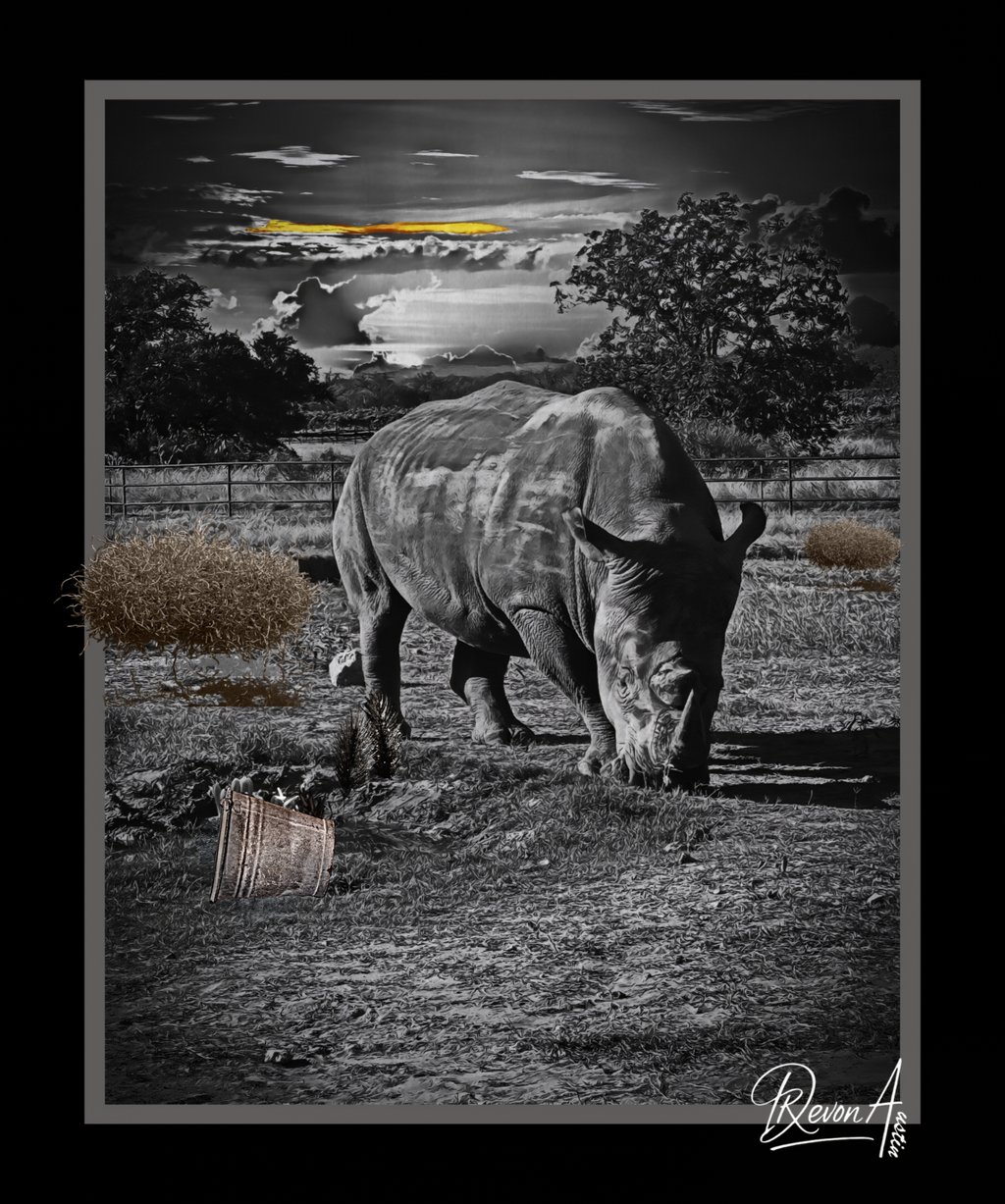
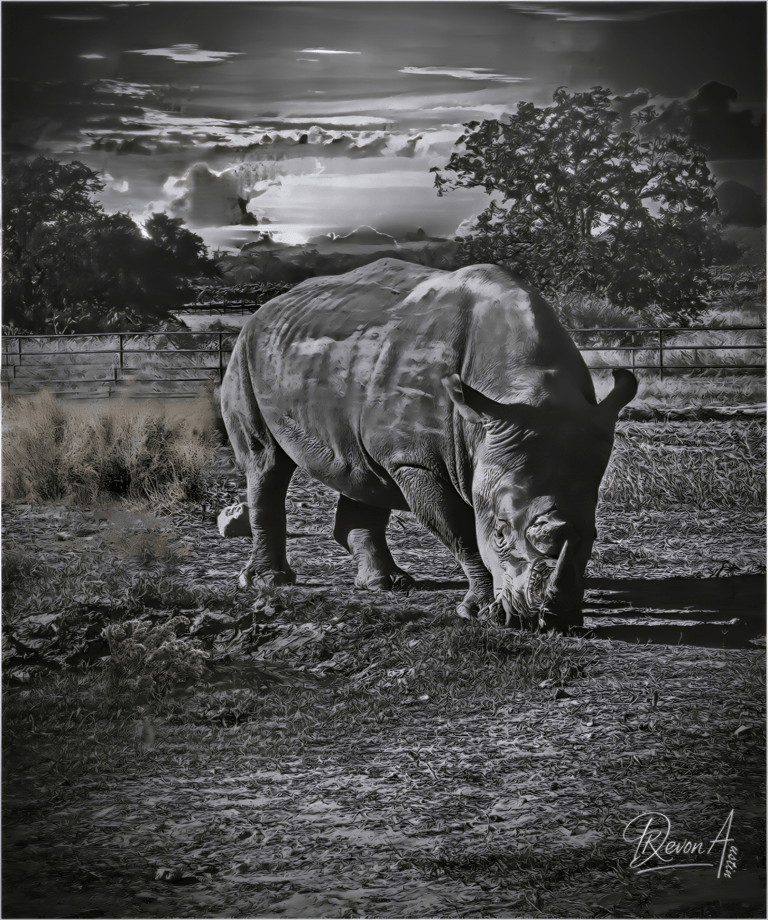
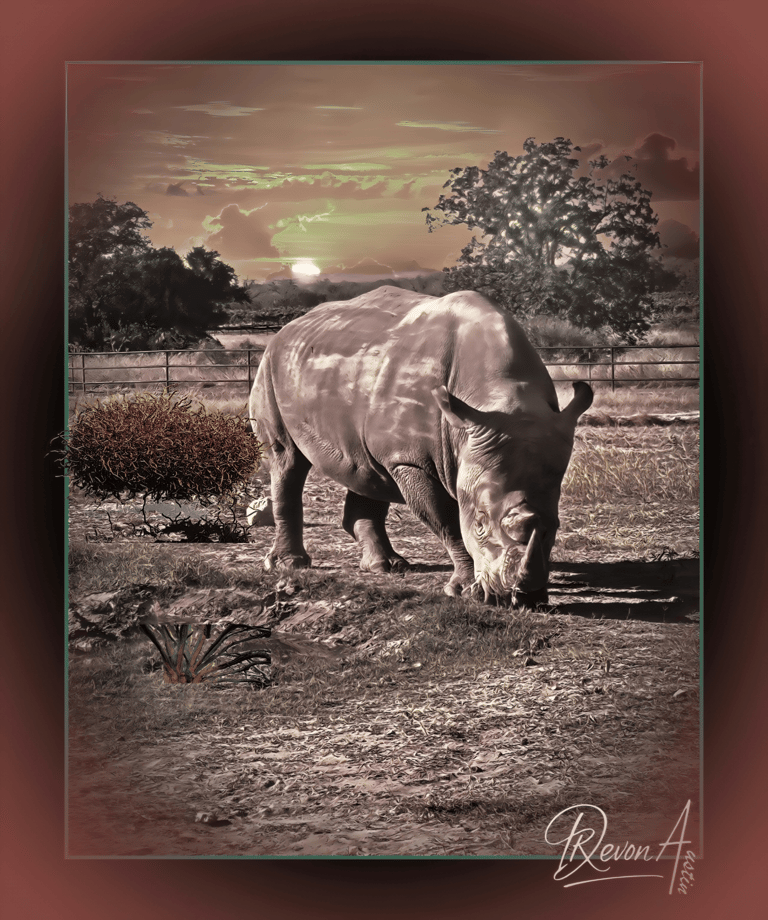
Echo Beneath the Sky
Evening Presence
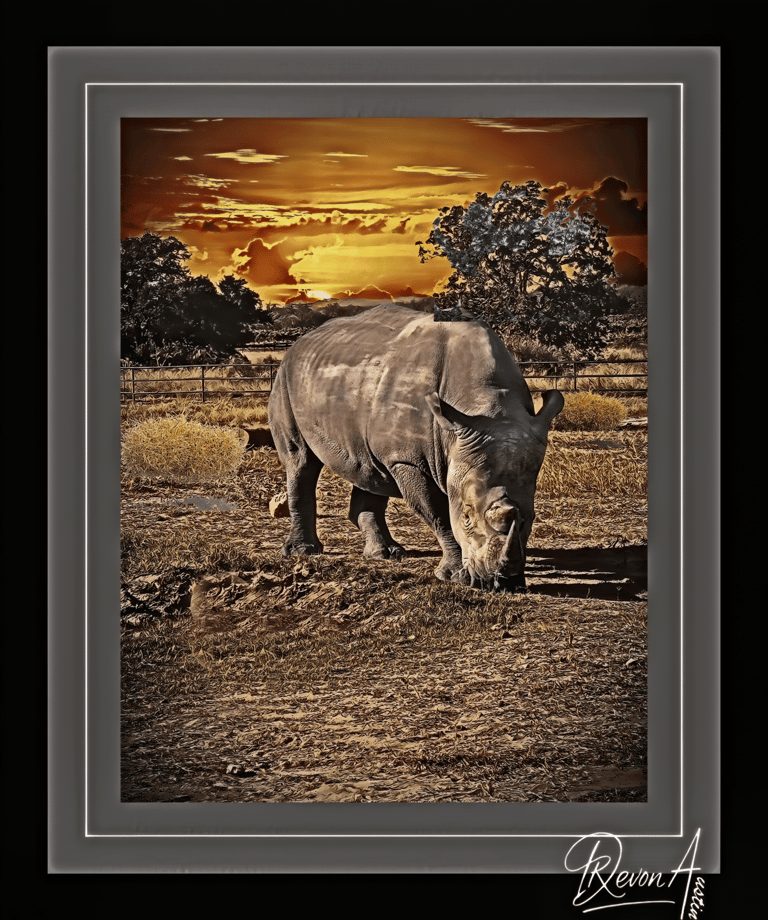
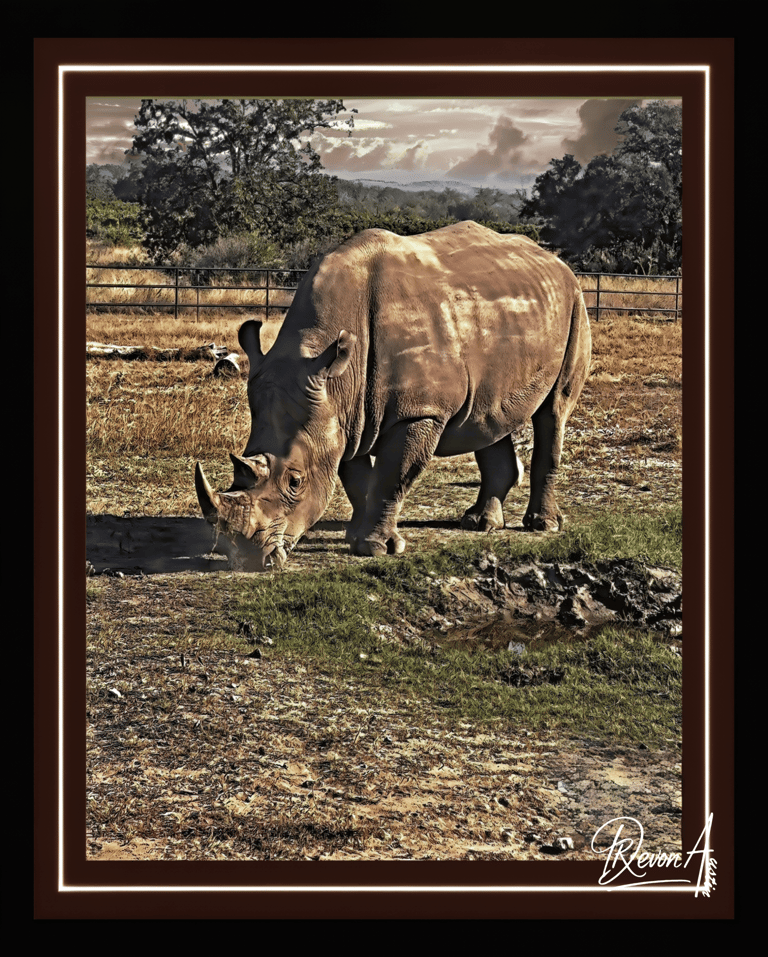
Grounded in the Hill Country
Fire on the Horizon
He stands as if the land rose around him and decided to take shape. Thick skin like weathered stone. Ears turning toward sounds no one else hears. A body built not for speed or spectacle, but for endurance. There is something grounding about a rhinoceros. Not dramatic. Not restless. Just present.
In the open Texas air, his weight feels anchored. Dust settles differently around a creature like this. Light moves across his back, revealing textures that tell stories older than fences, older than vineyards, older than the roads that bring people here.
A rhinoceros carries contradiction without apology. Massive yet vulnerable. Armored yet endangered. His stillness is not weakness. It is control.
Standing near him changes your sense of scale. Human urgency softens. Conversations quiet. Time slows. There is no performance in him. His presence alone commands space. And yet his existence is fragile in a world that moves too quickly. An animal built to endure predators now depends on human protection.
That tension stays with you. He reminds us that strength does not need spectacle. It can simply stand in the open and exist without apology. He does not belong to us. He belongs to the land and to time.
We are only witnesses.
And sometimes witnessing is enough.